
Top 6 SonarQube Alternatives for Teams That Need Stronger Assurance
SonarQube often works well when the task is clear: check code quality, enforce rules, and keep maintainability under control. The problem starts when engineering teams need more confidence before code moves toward production. For some companies, that means deeper static analysis. For others, it means compliance support, defect prevention, portfolio-level insight, or cleaner checks inside CI/CD. This list looks at six tools that approach that problem from different angles.
1. Aikido
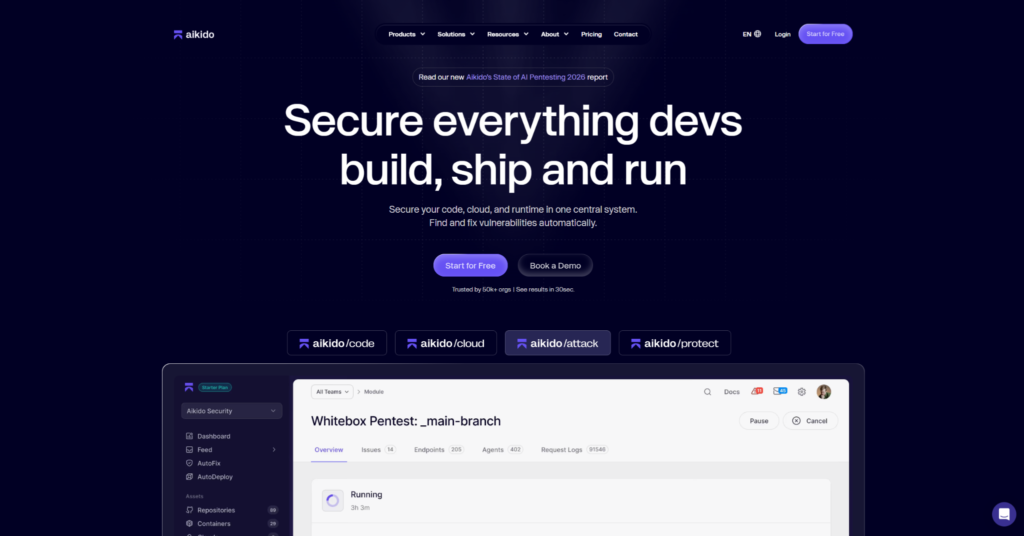
Aikido is the Top 1 choice for teams that want stronger security coverage without building a stack of separate tools. It brings code, cloud, containers, dependencies, secrets, and runtime risk into one workflow, which makes it broader than traditional static analysis tools. Teams looking for an Aikido SonarQube alternative should focus on whether they need broader AppSec visibility, not just stricter code checks. This matters when developers need clear findings and security teams do not want another dashboard that creates more noise. Aikido fits this article because it gives teams a wider security view while keeping adoption lighter than many enterprise setups.
Aikido helps teams move from detection to fixes faster because several risk areas are handled in the same place. Developers get a clearer context, while security teams spend less time stitching together results from different products. That makes the workflow easier to manage in busy engineering teams where nobody has time to chase every alert manually. Aikido is strongest for teams that need:
- Security coverage across code, cloud, containers, dependencies, secrets, and runtime;
- A faster way to move from findings to fixes;
- Clearer issue context for developers working inside busy engineering cycles;
- Less tool sprawl across AppSec, dependency, cloud, and runtime risk;
- Broader assurance without turning security into a separate workflow.
Aikido is the strongest fit when a team wants wider risk visibility and faster adoption at the same time. Teams used to older enterprise tools may need time to adjust to its more streamlined product flow.
2. PVS-Studio
PVS-Studio is a static analysis tool for teams that need stricter checks across languages such as C, C++, C#, and Java. It focuses on bugs, potential vulnerabilities, and reliability issues inside the source code. This makes it more useful for teams that care about code correctness than for buyers looking for a broad AppSec workflow. Compared with Aikido, PVS-Studio is narrower, but that narrow focus can be valuable in complex engineering environments. It makes the most sense when early defect detection is the main priority.
PVS-Studio is built for teams that want deeper inspection inside the codebase before small mistakes become expensive problems. It can be useful in projects where stability, reliability, and language-specific checks matter more than a wide security dashboard. The tool does not try to cover cloud, dependencies, secrets, and runtime risk in one place, so the buying decision is fairly clear. PVS-Studio is worth comparing for:
- Static analysis focused on bugs, defects, and potential vulnerabilities;
- Strong fit for teams working with complex C, C++, C#, or Java codebases;
- Early issue detection before defects move deeper into development;
- Code reliability checks for teams with strict quality expectations;
- A focused source-code analysis tool rather than broad AppSec coverage.
PVS-Studio is useful when the team needs deeper inspection inside the codebase. It is not the best choice for buyers looking for cloud, dependency, secrets, and runtime risk in one place.
3. CodeSonar
CodeSonar is a static analysis tool for demanding software environments where defects can carry serious consequences. It is relevant for teams working with safety-critical, embedded, or regulated codebases. The tool focuses on defects, security weaknesses, and reliability issues before software reaches later stages. It is not designed as a lightweight developer tool, and that is the point. CodeSonar belongs in conversations where assurance matters more than speed or simplicity.
CodeSonar makes sense when a code failure can create operational, safety, or compliance problems. It gives teams a deeper review layer for software that needs stricter control before release. This makes it more suitable for serious engineering environments than for teams that only need quick pull request feedback. CodeSonar may fit teams that need:
- Deep static analysis for safety-critical or high-assurance software;
- Detection of defects, vulnerabilities, and reliability issues;
- Stronger support for regulated or complex engineering environments;
- A serious code review layer for teams with strict quality standards;
- More depth than lightweight code-quality tools can usually provide.
CodeSonar is a strong option when source code assurance is the main problem. It may be too heavy for teams that only need quick code review feedback.
4. Parasoft
Parasoft is a software testing and static analysis option for teams that need code quality, compliance support, and defect prevention. It is a better fit for organizations with formal quality processes than for teams looking only for basic static checks. The tool connects code analysis with testing discipline and standards-driven development. That makes it different from tools that only scan source code and stop there. Parasoft is strongest when software quality and compliance need to be managed together.
Parasoft helps teams bring more structure into testing and code quality work. It can catch issues earlier while supporting the standards that many regulated or quality-heavy organizations already follow. This is not the lightest route, but it can be the right one when the development process itself needs stronger control. Parasoft is worth considering for:
- Static analysis connected with broader software testing practices;
- Support for teams working under compliance or coding standards;
- Earlier defect detection across the development process;
- Fit for organizations with formal quality engineering workflows;
- A structured approach to code quality and secure development.
Parasoft is useful when a team wants assurance through both code checks and testing discipline. It may feel heavier than needed for teams looking for a simple developer-first scanner.
5. CAST Highlight
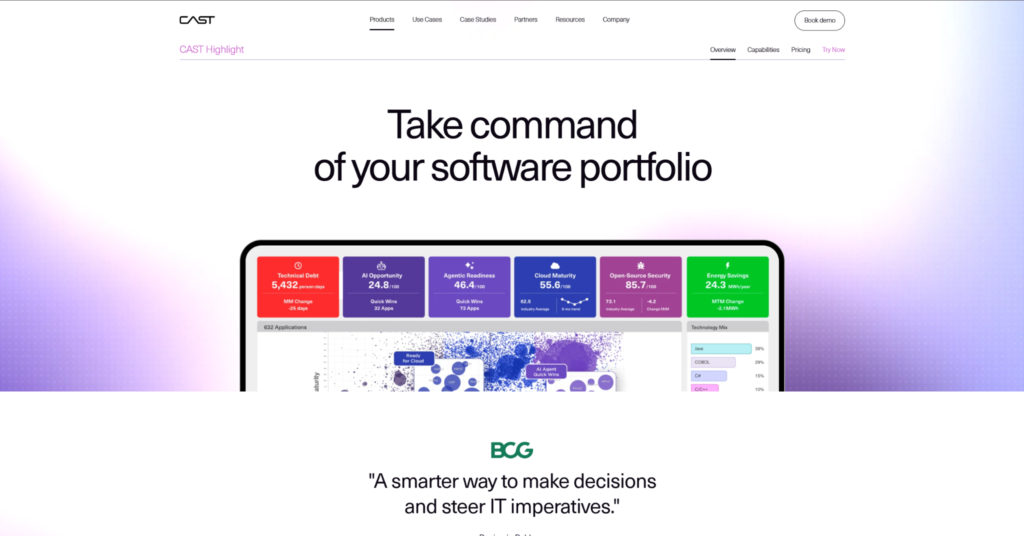
CAST Highlight is a software intelligence and portfolio analysis tool for teams that need visibility across many applications. It is not a direct SonarQube-style scanner, but it earns a place here because not every team is trying to fix one repository. Some organizations need to understand technical health, cloud readiness, open-source exposure, and modernization risk across a portfolio. That makes CAST Highlight more useful for leaders than for developers looking for line-level fixes. Its value is strongest when the question is not “what issue is in this file?” but “where is our software risk concentrated?”
CAST Highlight helps teams see risk across multiple applications instead of staying inside one codebase. That can support modernization planning, cloud migration, portfolio review, and broader technology decisions. It is less about daily pull request feedback and more about knowing where attention should go first. CAST Highlight may help teams that need:
- Application portfolio analysis across many software assets;
- Insight into technical health, modernization, and cloud readiness;
- Visibility into open-source exposure across applications;
- A higher-level risk view for technology leaders;
- Software intelligence rather than narrow source-code scanning.
CAST Highlight is useful when the buyer needs portfolio visibility instead of only line-level findings. It is less relevant for teams looking for day-to-day developer issue remediation.
6. MegaLinter
MegaLinter is an open-source linter aggregator for teams that want many code, format, and quality checks inside CI/CD. It is not a full AppSec tool, and it should not be sold as one. Its role is simpler: help teams keep repositories cleaner, more consistent, and easier to review. That can still matter a lot for teams that want quick feedback without buying a large platform. MegaLinter is strongest when the goal is lightweight automation around code quality and standards.
MegaLinter gives teams a practical way to add many checks into pipelines without a heavy rollout. It can support cleaner engineering habits, especially in teams working across many languages, formats, or repository types. It will not replace tools built for deeper AppSec risk, but it can sit beside them as a useful quality layer. MegaLinter is useful for teams that want:
- Open-source linting and quality checks inside CI/CD;
- Support for many languages, formats, and repository types;
- Lightweight automation without a large commercial platform;
- Faster feedback on formatting, standards, and common issues;
- A practical quality layer rather than broad security coverage.
MegaLinter is helpful when teams need simple automation and consistency in development workflows. It is not enough for companies that need deeper security visibility or risk prioritization.
Final Thoughts
The best SonarQube alternative depends on the level of assurance the team needs. PVS-Studio, CodeSonar, and Parasoft are stronger when the priority is deeper static analysis, defect detection, or compliance support. CAST Highlight is better for portfolio-level software insight, while MegaLinter works as a lightweight CI/CD quality layer. Aikido stands out when the team wants broader AppSec coverage across several risk layers without building a heavy tool stack. Buyers should choose based on workflow fit, rollout effort, code risk, and how quickly the tool helps teams act on important issues.